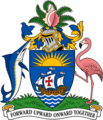
 Constitution of The Bahamas
Guide
How the Constitution is changed
The Constitution of 1973 is still in force in the form in which it was made. Its most important articles can be altered only by a special majority in Parliament followed by a referendum, and the two referendums held so far, in 2002 and 2016, rejected every change put to them.
Has the Constitution ever been amended?
Not in any way that matters to the reader. The Constitutional Commission reported in 2013 that the only changes since Independence had been minor and cosmetic, to provisions that are not entrenched. Every proposal to alter an entrenched article has either failed at a referendum or never reached one. The text on this site is the Constitution as published by the Government of The Bahamas.
What has changed is how some of the text is applied. Courts have interpreted the citizenship articles, the Sovereign named in the text has changed, and Parliament has legislated around the Constitution with ordinary Acts on nationality and immigration. The timeline below records all of this.
The procedure in Article 54
Article 54 lets Parliament alter any provision of the Constitution by an Act passed by both Houses, but it sorts the articles into three tiers and makes the important ones progressively harder to touch. An Act alters the Constitution only if it says that is its purpose.
- Ordinary articles
Passed like any other Act, by a simple majority in each House. These cover the day-to-day machinery: the Public Seal, the Speaker, procedure and quorum in Parliament, the Attorney-General, Parliamentary Secretaries, the Leader of the Opposition and the prerogative of mercy, among others.
- Two-thirds and a referendum
The Governor-General, the qualifications and tenure of Senators and members of the House, the service commissions, the public service and the finance chapter. A Bill needs the votes of two-thirds of all the members of each House and then the approval of a majority of the electors voting.
- Three-quarters and a referendum
The supremacy clause, citizenship, the fundamental rights and freedoms, the existence and composition of Parliament, the Senate’s powers, the life of Parliament, the Constituencies Commission, the Cabinet, the courts, and Article 54 itself. A Bill needs three-quarters of all the members of each House and then a majority of the electors voting. The same applies to altering the Bahamas Independence Act 1973.
- Partly entrenched
The referendum itself is run under the Constitutional Referendum Act 1977. A Bill altering an entrenched article carries its own ballot question, and the vote takes place after the Bill has passed both Houses. There is no turnout threshold: what counts is a majority of those who vote.
Timeline
Internal self-government
The Bahamas Islands (Constitution) Order 1963 comes into force, giving the colony a cabinet system with a Premier responsible to the elected House of Assembly.
1969
The 1969 constitution
The Bahamas Islands (Constitution) Order 1969 widens self-government and gives the colony the name Commonwealth of the Bahama Islands. The Independence Order calls it “the existing Order” and revokes it.
December 1972
The London conference
A constitutional conference at Marlborough House agrees the terms of independence and the text of the new Constitution, including the citizenship provisions and the entrenchment scheme in what became Article 54.
The Independence Order is made
Acting under the Bahamas Independence Act 1973, passed by the United Kingdom Parliament, the Queen in Council makes The Bahamas Independence Order 1973 at Windsor Castle. The Constitution is its Schedule.
Independence
The Order and the Constitution come into operation. The Commonwealth of The Bahamas becomes a sovereign democratic State with the Queen as head of state, represented by a Governor-General.
1977
The Constitutional Referendum Act
Parliament prescribes how the vote required by Article 54 is to be taken: a Bill altering an entrenched article must carry its ballot question, and the electors vote on it after the Bill has passed both Houses.
The first referendum
Five Bills, on gender equality in citizenship, a Teaching Service Commission, a Parliamentary Commissioner, a Boundaries Commission and judges’ retirement ages, are all rejected by about two to one. Four companion Acts passed without a referendum are never brought into operation.
2002 to 2006
The Adderley-Tynes Commission
A Constitutional Review Commission co-chaired by Paul Adderley and Harvey Tynes publishes The Bahamas Constitution: Options for Change (2003) and a Preliminary Report and Provisional Recommendations (2006), which included re-enacting the Constitution as an Act of the Bahamian Parliament. It never produces a final report.
The McWeeney Commission reports
Appointed in August 2012 to review the whole Constitution before the fortieth anniversary of Independence, the Constitutional Commission chaired by Sean McWeeney recommends gender-neutral citizenship articles, adding sex to Article 26, an independent Electoral and Boundaries Commission, a Director of Public Prosecutions, a cap on the size of the Cabinet, nine months’ notice of a general election, and preparing the public for a possible republic, while keeping the monarchy and appeals to the Privy Council for the time being.
The second referendum
Four Bills tabled in July 2014 to remove the differences between men and women in Articles 8, 9, 10 and 14 and to add sex to Article 26 pass both Houses with the required majority and are then rejected by the voters, each by more than 60 per cent.
A new Sovereign
On the death of Queen Elizabeth II the Crown passes to King Charles III. The Constitution still says “Her Majesty”; by the ordinary rule on the demise of the Crown those words are read as referring to the King.
Attorney General v Rolle
The Judicial Committee of the Privy Council holds that a child born in The Bahamas to a Bahamian father and a foreign mother who are not married is a citizen at birth under Article 6, which refers to “either of his parents”. The text is unchanged, but one of the inequalities the 2016 Bills addressed is removed by interpretation.
June 2026
Change by ordinary law
The Government tables The Bahamas Nationality (Amendment) Bill, 2026, which would let the Minister grant permanent residence to people whose citizenship applications are refused. Since the citizenship articles can be altered only by referendum, successive governments have looked to the Nationality Act and immigration law for change instead.
What still stands to be decided
The questions that have been put to the voters, or recommended by the commissions, and remain open:
- Whether a Bahamian woman may pass citizenship to a child born abroad, and whether a foreign husband may register as a citizen as a foreign wife may (Articles 8, 9 and 10).
- Whether sex should be a prohibited ground of discrimination in Article 26, as it already is in the opening words of Article 15.
- Whether the Constituencies Commission should become an independent electoral commission, and whether the Parliamentary Commissioner should have a constitutional office.
- Whether criminal prosecutions should pass from the Attorney-General to a Director of Public Prosecutions.
- Whether The Bahamas should become a republic, and whether appeals to the Privy Council should end.
- The position of children born in The Bahamas to parents who are not citizens (Article 7), which the 2013 Commission set aside for a further commission that has not been appointed.